
Compare the 2027 Ski-Doo Summit and Freeride. Discover key differences in shocks, engine performance, and track lengths to find the right sled for Idaho mountain riding.
Ski-Doo Summit vs Freeride: Which Is Better for Idaho Mountain Riding?
Idaho offers some incredible opportunities for mountain snowmobiling. From deep powder and tree riding to steep climbs, wide-open bowls, and technical sidehills, the terrain can challenge both riders and machines. For riders shopping for a serious mountain snowmobile, two of the most exciting options are the Ski-Doo Summit and Ski-Doo Freeride. Both are designed for deep snow and demanding mountain conditions. Both offer impressive Rotax engine options, modern REV Gen5 technology, and mountain-focused handling. However, they are built with slightly different riding styles in mind. The Summit focuses on deep-snow capability, maneuverability, and technical mountain riding. The Freeride takes that mountain capability and adds a more aggressive suspension package designed for riders who enjoy rough terrain, jumps, drops, and a more playful riding style. At Edge Performance Sports Mountain Home, we help snowmobile riders from Mountain Home, Boise, Twin Falls, and surrounding Southern Idaho communities find the right Ski-Doo for their experience level and preferred riding conditions. Let’s compare the 2027 Ski-Doo Summit and Freeride to see which is the better choice for Idaho mountain riding.
What Is the Difference Between the Ski-Doo Summit and Freeride?
The biggest difference between the Summit and Freeride is what each machine prioritizes. The Ski-Doo Summit is designed primarily for deep snow and mountain maneuverability. It is a great choice for riders who spend their days climbing, sidehilling, navigating trees, and exploring technical terrain. The Ski-Doo Freeride is built for aggressive mountain riding. It still offers strong deep-snow performance, but its suspension and overall setup are designed to handle bigger impacts and a more energetic riding style. Both are excellent mountain sleds. The right choice depends on what you enjoy doing once you get into the mountains.
2027 Ski-Doo Summit vs Freeride: Quick Comparison
| Feature | Ski-Doo Summit | Ski-Doo Freeride |
|---|---|---|
| Primary Focus | Deep snow and technical mountain riding | Aggressive mountain and backcountry freestyle riding |
| Platform | REV Gen5 Lightweight | REV Gen5 Deep Snow |
| Engine Options | Rotax 850 E-TEC & 850 E-TEC Turbo R | Rotax 850 E-TEC & 850 E-TEC Turbo R |
| Maximum Horsepower | Up to 180 hp with Turbo R | Up to 180 hp with Turbo R |
| Front Suspension | RAS 3 (34-inch ski stance) | RAS 3 with TwinLink Steering (34-inch stance) |
| Shock Packages | KYB 36 Plus / KYB Pro 36 EA-3 (depends on trim) | KYB Pro 40 EA-3 (Front, Center, & Rear) |
| Track Options | 146, 154, and 165-inch options (16 in. wide) | 146, 147, and 154-inch options (15 in. wide) |
| Best Riding Style | Technical sidehilling, tree riding, deep powder | Big air, natural drops, aggressive rough-terrain riding |
Specifications vary by engine, track configuration, and trim package. This comparison focuses on the 2027 model lineup.
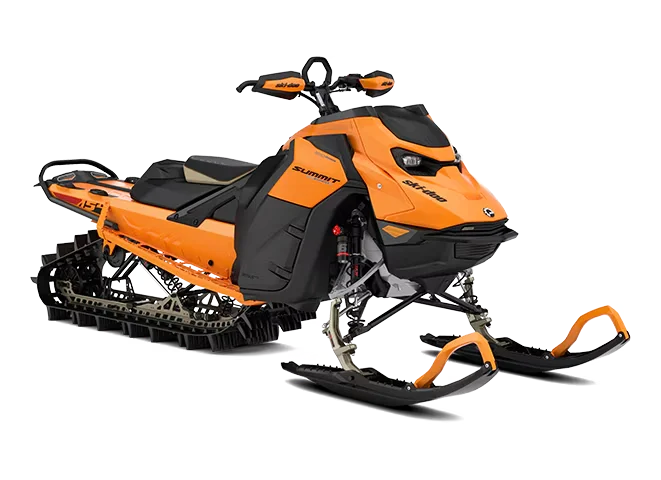
Ski-Doo Summit: Built for Technical Mountain Riding
The Ski-Doo Summit has earned its reputation as a serious mountain snowmobile.
When riders are navigating deep powder, working through tight trees, or maintaining control on a steep sidehill, maneuverability becomes extremely important.
The Summit is engineered around that type of riding.
For Idaho riders who prefer technical terrain and challenging snow conditions, the Summit provides a strong combination of flotation, handling, and control.
Where the Summit Excels
The Summit is especially appealing for:
- Deep powder riding
- Technical sidehilling
- Tight tree riding
- Steep mountain climbs
- Exploring remote terrain
- Riders who value precise handling
- Long days in challenging snow conditions
The Summit lineup also offers several configurations, allowing riders to choose the level of performance and equipment that best suits their needs.
Summit Adrenaline, X, and Expert: Which One?
Not every Summit is equipped the same:
- Summit Adrenaline: A capable mountain sled for riders who want strong deep-snow performance without needing the most specialized equipment.
- Summit X: A performance-focused mountain package with upgraded equipment, lightweight components, and a focus on deep-snow agility.
- Summit Expert: Built specifically for riders who prioritize technical terrain. The 2027 Expert features a narrow 34-inch ski stance, tMotion L/O rear suspension, and high-performance KYB Pro 36 EA-3 shocks.
For highly technical Idaho riding, the Summit Expert deserves particular attention.
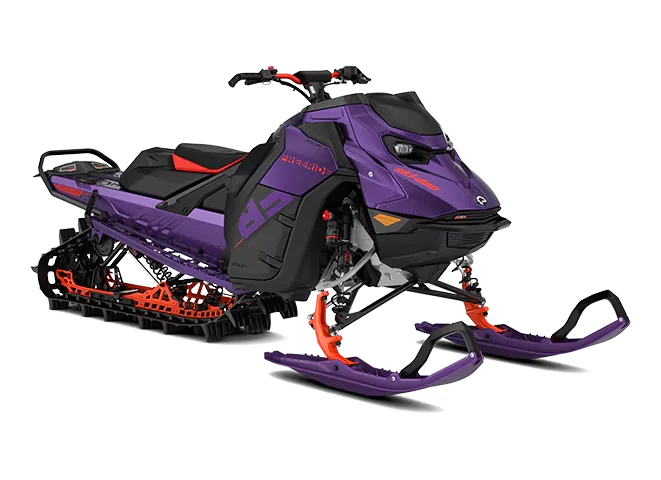
Ski-Doo Freeride: Built for Aggressive Mountain Riding
The Ski-Doo Freeride approaches mountain riding with a different personality.
It is designed for riders who want to push harder, attack rough terrain, jump natural features, and enjoy a more aggressive experience.
The 2027 Freeride features full KYB Pro 40 EA-3 shocks paired with the TwinLink steering system, giving it a shock and handling package built for demanding impacts, landing jumps, and precise control in rough backcountry terrain.
For riders who enjoy finding natural jumps, exploring challenging terrain, and riding with a more playful style, the Freeride is an exciting option.
Where the Freeride Excels
The Freeride is especially appealing for:
- Aggressive mountain riding
- Natural jumps and big drops
- Rough and uneven terrain
- Deep powder performance
- Backcountry freestyle riding
- Riders who prioritize heavy-impact suspension performance
- Experienced riders looking for a high-energy mountain sled
The Freeride is not limited to jumping. It remains a highly capable mountain snowmobile, but its design priorities make it particularly attractive to aggressive riders.
Engine Performance: Summit vs Freeride
Both the Summit and Freeride offer serious engine performance. For 2027, both lineups offer the naturally aspirated Rotax 850 E-TEC and the turbocharged 850 E-TEC Turbo R.
Rotax 850 E-TEC
The naturally aspirated 850 E-TEC produces 165 horsepower. It is a strong option for riders who want excellent mountain performance without stepping into a turbocharged model.
Rotax 850 E-TEC Turbo R
The 850 E-TEC Turbo R produces 180 horsepower up to 8,000 feet of elevation. That altitude capability is particularly appealing for mountain riders. As elevation increases, naturally aspirated engines lose power due to thin air, while the Turbo R is engineered to maintain its full rated output up to 8,000 feet. For Idaho riders who regularly explore higher elevations and demanding backcountry terrain, the Turbo R deserves serious consideration.
Which Has More Power?
Neither lineup automatically wins on horsepower. When equipped with the same engine option, the Summit and Freeride offer the exact same 165 hp or 180 hp engine output. The bigger differences come down to suspension, track selection, steering systems, and the way the machines are designed to be ridden.
Suspension: One of the Biggest Differences
Suspension is one of the most important areas to compare when choosing between these two sleds. The Summit lineup offers different KYB shock packages depending on trim. The Summit Expert includes KYB Pro 36 EA-3 front and rear shocks configured specifically for technical maneuvering. The Freeride upgrades to KYB Pro 40 EA-3 shocks at the front, center, and rear.
Why Does This Matter?
If your riding consists primarily of deep snow, controlled sidehilling, and technical maneuvering through tight trees, the Summit’s lightweight, flickable setup is ideal. If your riding involves repeated hard hits, rough terrain, jumps, or big drops, the Freeride’s heavier-duty shock package provides a massive advantage when absorbing hard landings. However, ideal suspension performance depends on rider weight, setup, riding technique, and terrain. The Freeride is not automatically better simply because it has larger shocks; the better suspension is the one that suits your specific riding style.
Track Length: Which Is Better for Idaho?
Track configuration is another major decision point. The Summit offers track lengths reaching 165 inches (with a 16-inch width), depending on trim and engine setup. The Freeride offers 146, 147, and 154-inch options (including the 147 x 15 x 3.0-inch PowderMax X-Light track option).
Shorter Mountain Tracks (146” – 147”)
A shorter track appeals to riders who prefer:
- Playful handling and popping up the ski tips
- Quick, agile direction changes
- Aggressive backcountry freestyle riding
- High-energy maneuverability
Longer Mountain Tracks (154” – 165”)
A longer track offers distinct advantages for:
- Deep powder flotation
- Steep mountain climbs
- Maintaining traction in bottomless snow
- Carrying momentum through technical terrain
Track width, lug height (2.5 in. vs 3.0 in.), suspension design, and snow conditions all factor in. Track length alone does not tell the whole story, but for riders who regularly face deep powder and steep climbs, a longer-track Summit is hard to beat.
Technical Riding Head-to-Head
Which Is Better for Tree Riding?
For riders who spend most of their time navigating tight trees and technical sidehills, start with the Summit. The Summit Expert in particular is designed around precise technical handling with its 34-inch ski stance and lightweight chassis design. While the Freeride handles trees well, the Summit is the ultimate specialist here.
Which Is Better for Jumps and Drops?
The Freeride takes the clear win here. Its KYB Pro 40 shock package, reinforced components, and TwinLink steering system make it specifically engineered to absorb heavy hits and hard landings off natural features.
Which Is Better for Deep Powder?
Both sleds are exceptional in deep snow. The Summit holds an edge due to its longer track configurations (up to 165”) and 16-inch wide track footprint for maximum flotation. The Freeride remains highly capable, particularly with the 147” or 154” 3-inch lug tracks.
Is the Ski-Doo Freeride Worth the Investment?
The Freeride’s value depends entirely on how you ride. If you plan to utilize its heavy-duty suspension and aggressive build to jump features, charge rough trails, and push high speeds, it is worth every penny. However, if your primary goal is technical sidehilling, tree navigation, and deep-powder exploration, a Summit (such as the Summit X or Expert) provides performance tailored directly to your riding style.
Which Ski-Doo Is Better for New Mountain Riders?
For riders who are newer to mountain snowmobiling, a Summit Adrenaline or Summit X is a great starting point. The Summit lineup offers accessible options that allow newer riders to build confidence in deep snow. The Freeride is tailored primarily toward experienced, aggressive riders who know they need a heavy-duty shock package. Regardless of which model you select, beginners should prioritize riding technique, safety gear, and formal mountain/avalanche safety training.
Our Recommendation for Idaho Mountain Riding
Choose the Ski-Doo Summit if you:
- Spend most of your time hunting deep powder and technical trees
- Enjoy technical sidehilling and steep climbs
- Want track lengths up to 165 inches for maximum flotation
- Prioritize low effort, precise mountain maneuvering
Choose the Ski-Doo Freeride if you:
- Ride hard and aggressive
- Hunt for natural jumps, drops, and big air
- Want the highest-spec KYB Pro 40 shock package
- Prefer a playful, energetic backcountry freestyle sled
Get Ready for Idaho Mountain Riding
No matter which Ski-Doo you choose, preparation is key. Mountain riders should always carry appropriate avalanche safety gear (beacon, probe, shovel), obtain proper training, check daily avalanche forecasts, and ride with experienced partners. Always perform a pre-ride inspection on your sled before heading out, checking your track, belt, suspension, fluids, controls, and safety gear.
Shop Ski-Doo Summit and Freeride Snowmobiles in Mountain Home, Idaho
If you are deciding between the Ski-Doo Summit and Freeride, visit Edge Performance Sports Mountain Home. Our team can help you compare current Ski-Doo models, evaluate track and engine options, review financing options, and select the right accessories and riding gear for your setup. We proudly serve riders from Mountain Home, Boise, Twin Falls, and communities across Southern Idaho.
- Address: Edge Performance Sports Mountain Home, 3195 Industrial Way, Mountain Home, ID 83647
- Phone: (208) 580-4600
Visit us today or give us a call to find the perfect Ski-Doo for your next winter adventure!